

What do students in the mountains of western North Carolina, along the North Carolina coast, and in rural Alaska have in common? Although they live in very different environments, each community faces environmental challenges that affect its landscapes, ecosystems, and residents. An environmental education project led by Appalachian State University's Department of Geological and Environmental Sciences is bringing these communities together to explore those connections.
The Empathic Planet Project is an initiative funded by the U.S. Environmental Protection Agency (EPA) through a $107,000 grant, that uses immersive 360° videos and virtual reality (VR) technology to help middle and high school students investigate local environmental issues, experience the perspectives of other communities, and develop a deeper understanding of how environmental changes affect people and places.
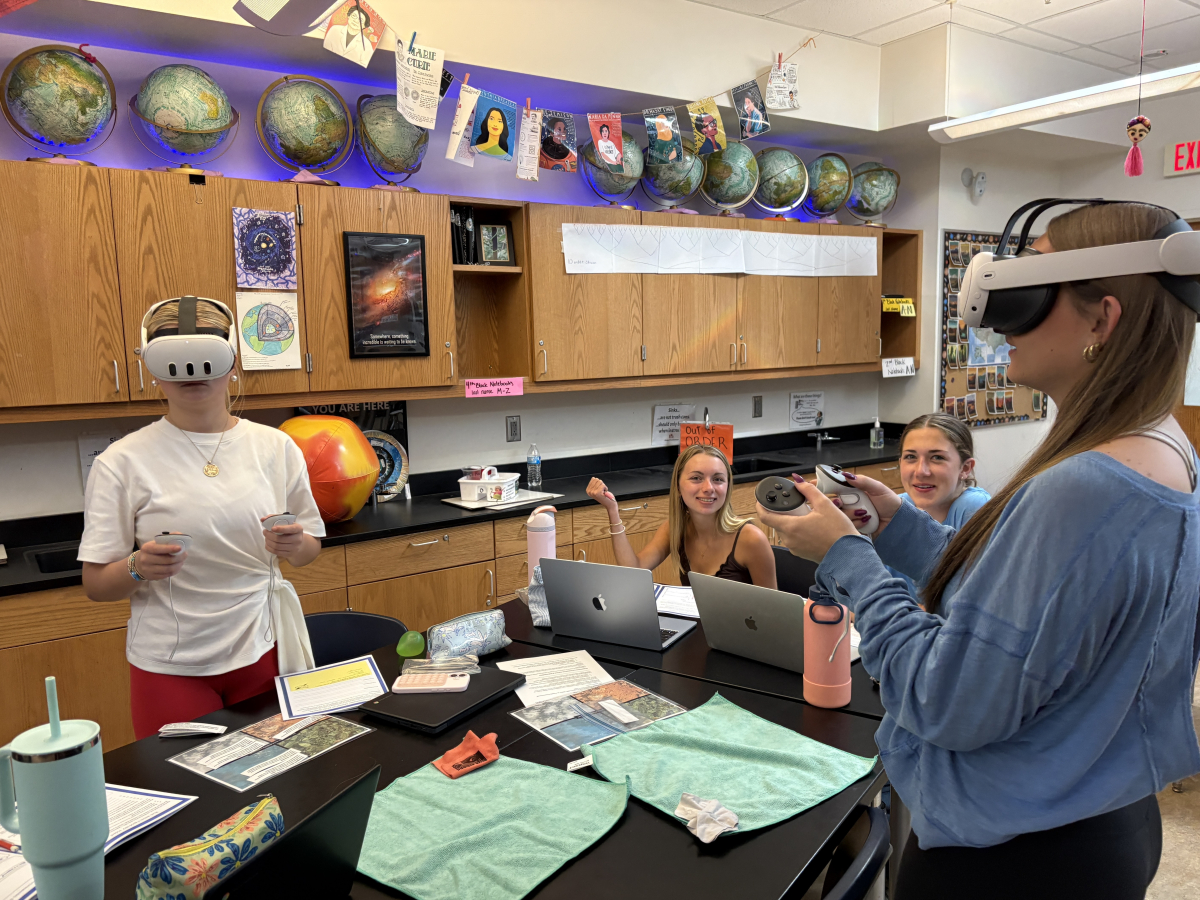
Students at Watauga High School test the VR headsets while completing activities focused on local and global environmental impacts.
Led by Marta Toran, senior lecturer in the Department of Geological and Environmental Sciences, the project is now in its second year of development and implementation. Working in collaboration with educators in Watauga County (NC), New Hanover County (NC), Newhalen Village (AK), and Port Heiden Village (AK), the project team is preparing for full classroom implementation across all three regions in spring 2027, following a successful pilot in spring 2026. Lela Craven, an Environmental Science major with a concentration in Earth Systems, serves as the project intern, contributing to the development of equipment training videos and compiling research on the integration of immersive technology into science education.
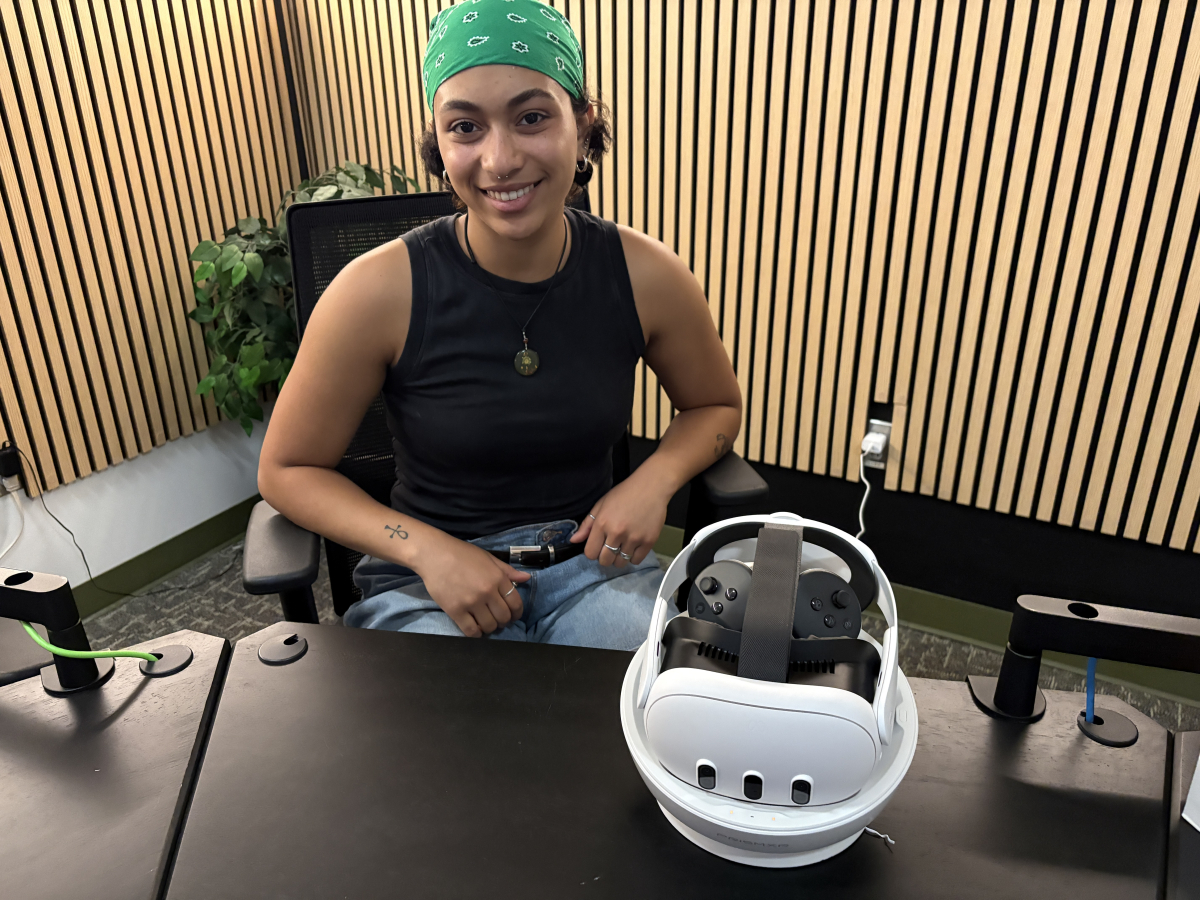
Lela Craven, project intern for Empathic Planet while filming training videos at the App State recording studio.
Connecting Teachers Across Three Regions
At the heart of Empathic Planet is a partnership between university researchers and K–12 educators who bring different geographic perspectives, classroom experiences, and knowledge of their local communities. Collaborating teachers have helped test and shape the educational activities and adapt them to their students, school settings, and curriculum requirements. The geographic diversity of the participating schools is a central feature of the project. Students in the Appalachian Mountains experience environmental conditions and challenges different from those encountered by students in coastal North Carolina or rural Alaska. By connecting these classrooms, Empathic Planet creates opportunities for students to recognize both the differences and similarities in how communities experience environmental change.
Rather than learning exclusively through textbooks or traditional videos, students will use 360° cameras to document environmental issues in their own communities and immersive videos to explore the environments of participating schools in other regions. The goal is not simply to introduce new technology into classrooms, but to use that technology to foster curiosity, environmental awareness, and empathy for communities beyond students' immediate surroundings.
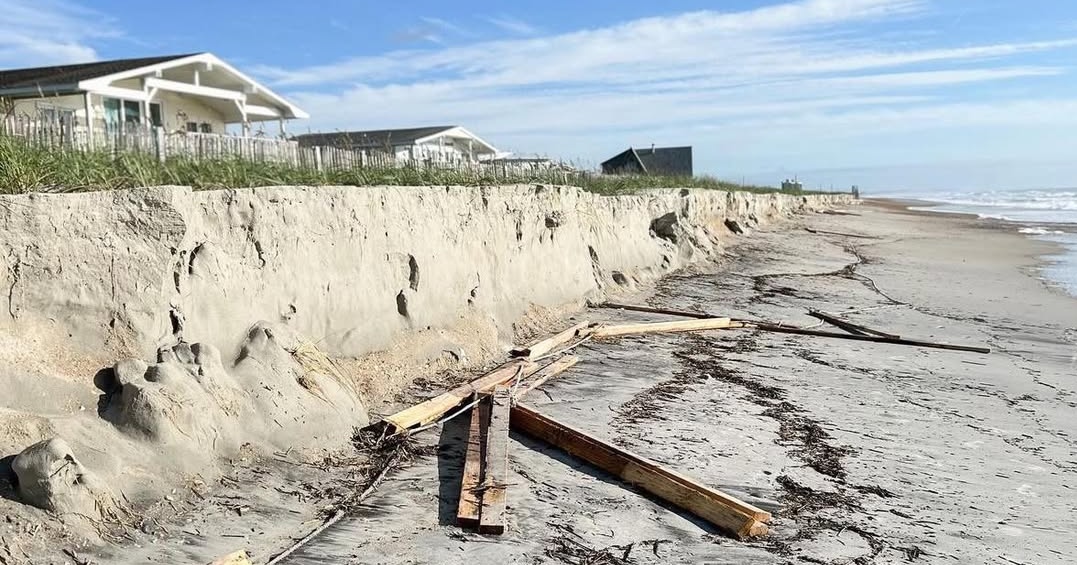
Beach erosion is the one of the environmental impacts that Wilmington Middle School will be studying and feature in their 360 ° video.
The project includes three interconnected lessons that guide students from investigating environmental issues in their own communities to exploring conditions in other regions and considering how environmental changes affect people. Students begin by examining local environmental conditions and documenting them through 360° video. They then explore videos produced by students in other participating regions, allowing them to virtually experience landscapes and environmental challenges that may be very different from their own. Finally, students consider the human dimensions of these issues, including how communities respond and adapt to environmental challenges. The activities are designed to align with state science education standards while giving teachers flexibility to integrate the materials into their existing instruction.
Each participating school received $5000 worth of equipment including 360° cameras and Meta Quest VR headsets, along with instructional materials and teacher training.
From Pilot Classrooms to Broader Implementation
Collaboration with teachers has been particularly important in addressing these challenges and ensuring that the materials are practical for use in a range of classroom settings. By combining the expertise of K–12 educators with university-based environmental science and educational research, Empathic Planet demonstrates how partnerships across distant communities can create meaningful opportunities for students to learn about environmental change, not only as a scientific issue, but also as an experience that affects people's lives.
Beyond the participating classrooms, the Empathic Planet team is developing an online resource hub where teachers can access instructional materials, 360° videos, and guidance for incorporating immersive experiences into environmental education.
 This project has been n part by the United States Environmental Protection Agency under assistance agreement 03D32825 to Appalachian State University. The contents of this website do not necessarily reflect the views and policies of the Environmental Protection Agency, nor does the Environmental Protection Agency endorse trade names or recommend the use of commercial products mentioned in this document, as well as any images, video, text, or other content created by generative artificial intelligence tools, nor does any such content necessarily reflect the views and policies of the Environmental Protection Agency.

Students with VR headsets
