Dr. Marshall is the Director of the Environmental Sciences Program within the GES Department. His research utilizes mathematical modeling, computer programming, and data analysis to better understand our planet and its processes. Since arriving at Appalachian State University, he has worked on research in fault and fracture mechanics, satellite geodesy, near-surface geophysics, and several other Earth science data analysis projects. Much of his research has been funded by the Southern California Earthquake Center as well as other agencies. In 2016, Dr. Marshall was named one of Appalachian’s Faculty of Distinction. Dr. Marshall is also a self-admitted computer geek, and has assisted numerous colleagues with computer building/design and data analysis and visualization.
The first aspect of Dr. Marshall’s research program is focused on understanding the physics of fracture and fault behavior. Much of his work has focused on modeling the mechanics of the complex network of active earthquake-producing faults in southern California. The main questions of this research are:
- How do geometrically-complex faults and fault systems behave? What is their slip behavior? What types of surface deformation can be expected from geometrically-complex fault systems? How do geometrically-complex faults perturb local stress fields and interact with each other? What is the seismic potential of complex fault systems?
A second aspect of Dr. Marshall’s research involves satellite geodesy, which involves using satellite data to measure motions of the surface of the Earth. His recent work has focused on two main techniques that offer accurate and high-resolution measurements of surface motions: the Global Positioning System (GPS) and Interferometric Synthetic Aperture Radar (InSAR). The general goals of this research are:
- To quantify the spatiotemporal patterns of both tectonic and non-tectonic (often human-induced) deformation in tectonically active regions.
- To determine the activity level, locations, and geometry of faults in tectonically active regions. This requires the integration of geodetic data and fault modeling.
A third aspect of Dr. Marshall’s research involves using field-based geophysical measurements to determine the geological configuration of the shallow subsurface. His work has focused on using Ground-Penetrating Radar (GPR), direct current electrical resistivity, and seismic refraction surveying to image the subsurface for both geological and environmental purposes.
Education
- B.S. Wright State University
- M.S. University of Idaho
- Ph.D. University of Massachusetts
Courses Taught
- GES 1101 - Introduction to Physical Geology
- GES/PHY 3160 - Introduction to Geophysics (cross-listed with Physics)
- GES 3455 - Quantitative Data Analysis of Earth and Environmental Scientists
- GES 1103/2500 - Iceland Summer Course - Land of Fire and Ice
Website and CV
Recent Publications (* indicates student research advisee)
Visit Dr. Marshall's profile on Google Scholar.
- Plesch, A., Marshall, S.T., Shaw, J.H. (2026). The Community Fault Model (v. 6.1) for Southern California, Bulletin of the Seismological Society of America. https://doi.org/10.1785/0120250247.
- *Harris, R.H., Evans, S.G., Marshall, S.T., Godsey, S.E., Parsekian, A.D. (2025). Using Ground-Penetrating Radar to Infer Ice Wedge Characteristics Proximal to Water Tracks, Journal of Geophysical Research Earth Surface, Vol 130, No 1, https://doi.org/10.1029/2024JF007832.
- *Elston, H., Cooke, M.L., Loveless, J.P., Marshall, S.T. (2024). A New Method to Invert for Interseismic Deep Slip Along Closely Spaced Faults using Surface Velocities and Subsurface Stressing-Rate Tensors, Earth and Space Science, Vol 11, No 1, https://doi.org/10.1029/2023EA003069.
- *Devine, S., *Harper, H., Marshall, S.T. (2022). Mechanical Models of Fault Slip Rates in the Transverse and Peninsular Ranges, CA. Seismological Research Letters, Vol 93, No 6, pp. 3135-3150, https://doi.org/10.1785/0220220182
- Cowan E.A., Seramur, K.C., Costa, J.W., *Bradley-Lewis, N., Marshall, S.T. (2022). Integration of shallow geophysics, archaeology and archival photographs to reveal the past buried at Ingleside Plantation, Piedmont North Carolina (USA). Archaeological Prospection. Vol 29, No 4, pp. 545– 556, https://doi.org/10.1002/arp.1871.
- Johnson, K.M., Hammond, W.C., Burgette, R.J., Marshall, S.T., Sorlien, C.C. (2020). Present-day and long-term Uplift across the Western Transverse Ranges of southern California. Journal of Geophysical Research, Vol. 125, e2020JB019672, https://doi.org/10.1029/2020JB019672.
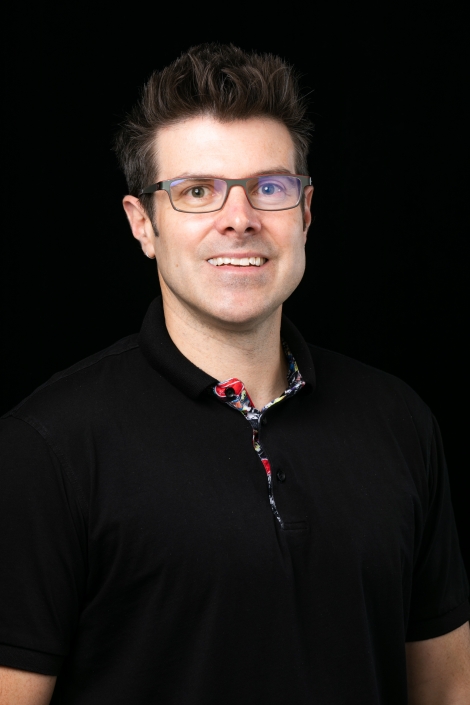
Title: Professor: Geophysics, Satellite Geodesy, and Fracture Mechanics, Environmental Science Program Director, (he/him/his)
Department: Department of Geological and Environmental Sciences
Email address: Email me
Phone: (828) 262-8320